
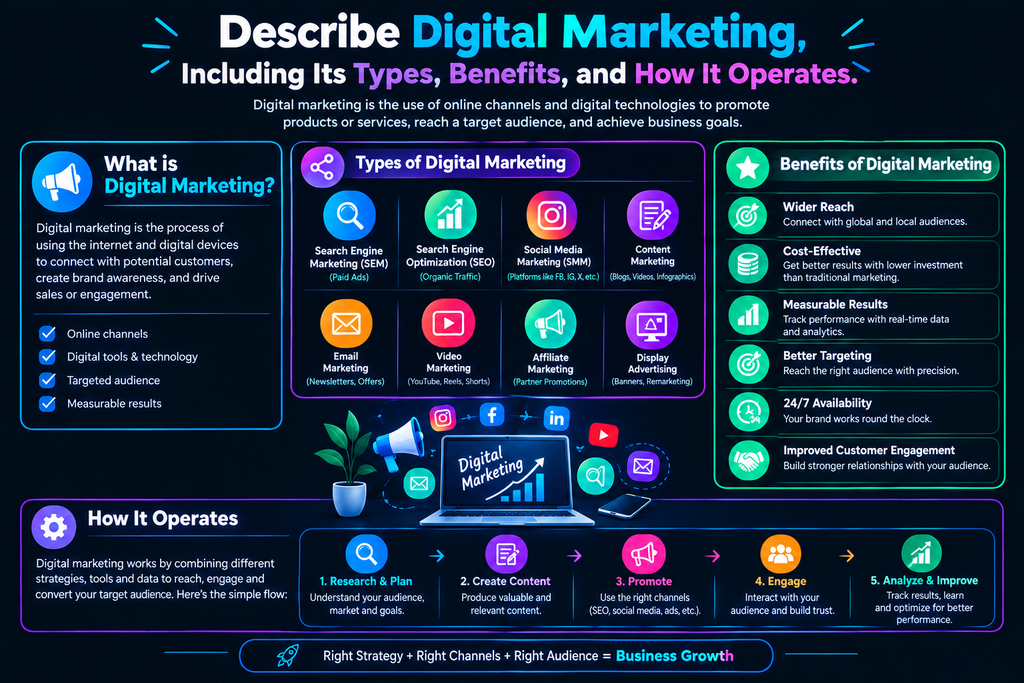
Digital marketing has changed the way businesses connect with customers. Instead of depending only on newspapers, television, or physical advertisements, businesses can now reach people through search engines, social media, websites, email, and online advertising.
If you want to explain digital marketing in simple words, it is the process of promoting products, services, or brands through digital channels. It helps businesses reach the right audience, communicate with potential customers, and measure their marketing performance.
In this guide, we will explain digital marketing, its major types, how it works, its benefits, and a simple real-world example.
What Is Digital Marketing?
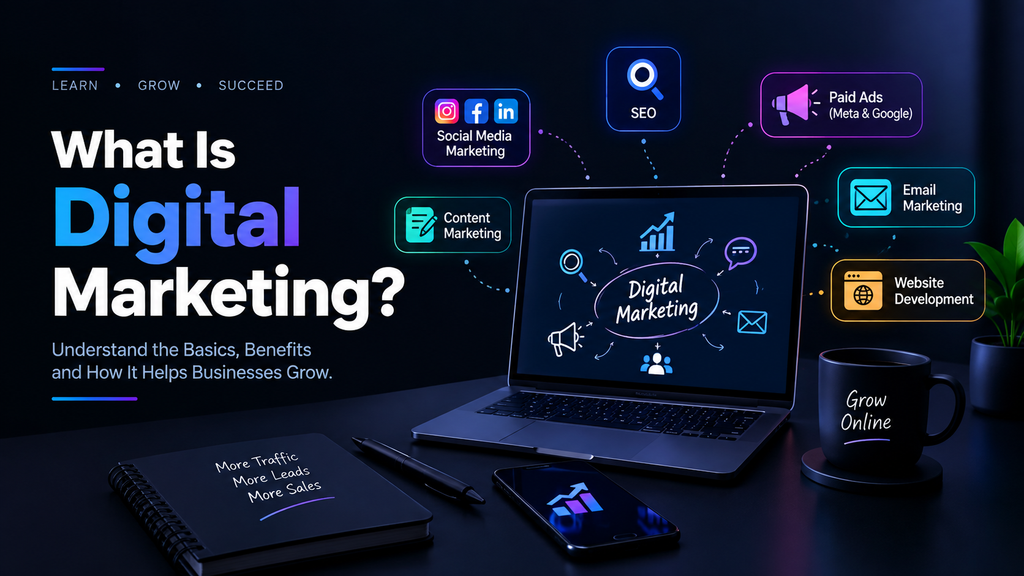
Digital marketing is the use of digital technologies and online channels to promote a business, product, service, or brand.
These channels can include:
- Search engines such as Google
- Social media platforms
- Business websites
- Online advertisements
- Mobile applications
- Digital content
For example, when a person searches Google for “best digital marketing agency near me” and sees a company’s website, that company is using digital marketing to reach a potential customer.
Digital marketing is not limited to selling products. Businesses also use it to build brand awareness, generate leads, communicate with customers, and develop long-term relationships.
How Does Digital Marketing Work?
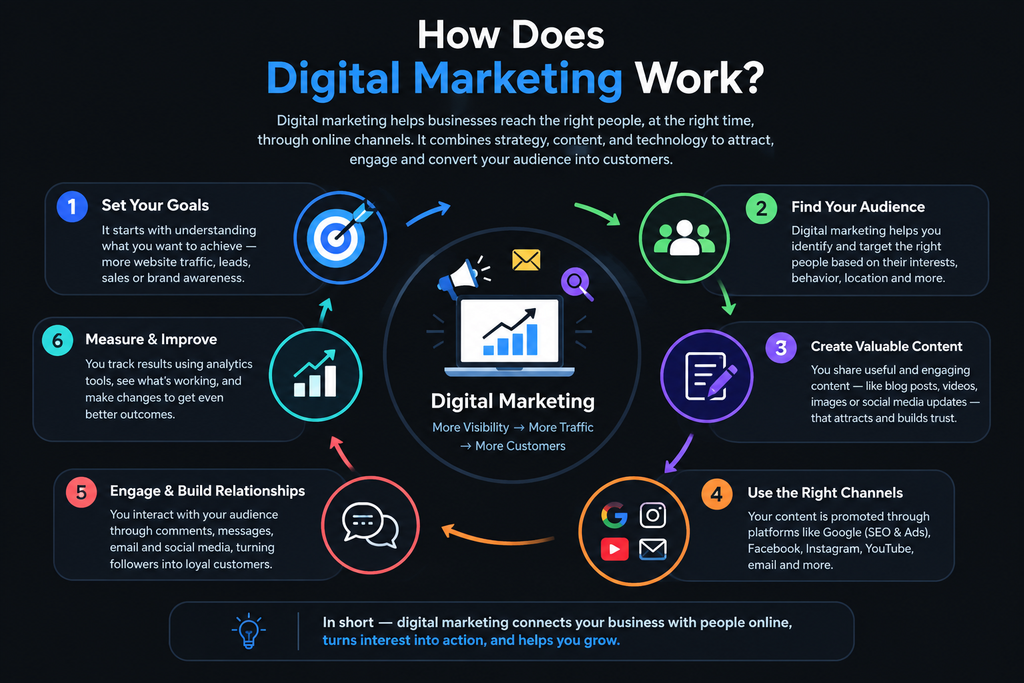
To explain digital marketing properly, it is important to understand how the complete process works.
Digital marketing usually follows these steps:
1. Identify the Target Audience
First, a business needs to understand who its potential customers are.
It may consider factors such as:
- Age
- Location
- Interests
- Needs
- Online behavior
- Buying preferences
2. Set Marketing Goals
The business then decides what it wants to achieve.
Common goals include:
- Increasing website traffic
- Generating leads
- Increasing sales
- Building brand awareness
- Growing social media engagement
3. Choose the Right Digital Channels
Different audiences use different platforms. A business can choose channels according to its goals and customers.
For example, a company may use SEO for Google searches and social media marketing to engage its audience on platforms such as Instagram or LinkedIn.
4. Create Useful Content
Businesses create content that provides information, answers questions, demonstrates products, or encourages people to take action.
Content can include:
- Blog posts
- Videos
- Images
- Infographics
- Social media posts
- Emails
5. Measure and Improve Results
One important advantage of digital marketing is that businesses can track performance.
They can analyze metrics such as:
- Website visitors
- Clicks
- Leads
- Engagement
- Conversions
- Advertising performance
The business can then improve its strategy based on the data.
Types of Digital Marketing
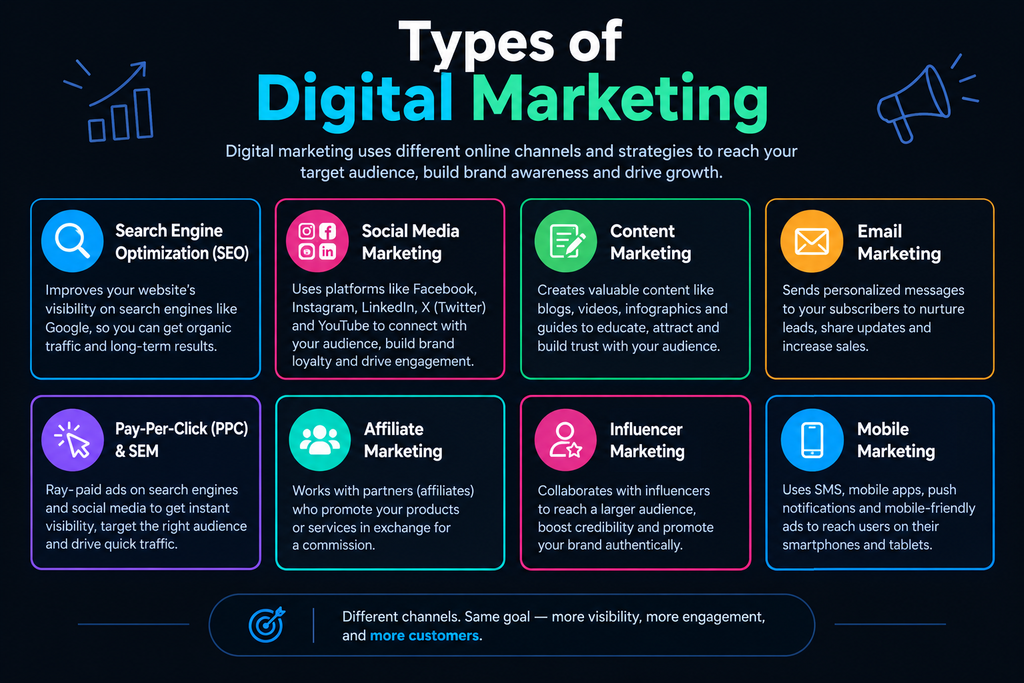
There are several important types of digital marketing. Each one has a different purpose and can be used as part of a broader marketing strategy.
1. Search Engine Optimization (SEO)
Enhancing a website to have it show up more prominently in natural search engine results is known as SEO.
Businesses use SEO to attract people who are already searching for relevant information, products, or services.
SEO activities can include:
- Keyword research
- Creating useful content
- On-page optimization
- Technical SEO
- Link building
- Improving website experience
For example, a digital marketing agency can create a page targeting “SEO services for small businesses” to reach people searching for that service.
2. Search Engine Marketing and PPC
Search engine marketing often includes paid search advertising, commonly known as PPC or pay-per-click advertising.
Businesses can create advertisements that appear when people search for particular keywords.
Unlike organic SEO, paid search allows businesses to pay for advertising placement and typically pay based on clicks or other campaign objectives.
3. Social Media Marketing
Social media marketing involves promoting a business through social media platforms.
Businesses can use social media to:
- Share educational content
- Showcase products
- Communicate with customers
- Build brand awareness
- Generate leads
- Run paid advertisements
Both organic posts and paid campaigns can be part of a social media strategy.
4. Content Marketing
Content marketing focuses on creating and distributing useful and relevant content for a specific audience.
Examples include:
- Blog articles
- Videos
- Guides
- Case studies
- Infographics
- Tutorials
Good content can help answer customer questions while also supporting other digital marketing activities such as SEO.
5. Email Marketing
Email marketing allows businesses to communicate directly with people who have provided their email address or otherwise subscribed to communications.
Businesses may use email for:
- Newsletters
- Product updates
- Special offers
- Educational content
- Customer communication
Email can also help businesses maintain relationships with existing customers.
6. Affiliate Marketing
Affiliate marketing is a performance-based approach in which affiliates promote a company’s products or services.
When a specified action occurs, such as a sale or lead, the affiliate may receive a commission according to the agreed terms.
7. Influencer Marketing
Influencer marketing involves collaborating with content creators who have an established audience.
Businesses may work with relevant creators to introduce products or services to their followers.
The effectiveness of an influencer campaign can depend on factors such as audience relevance, credibility, content quality, and campaign goals.
8. Mobile Marketing
Mobile marketing focuses on reaching customers through mobile devices.
It can include:
- SMS marketing
- Mobile applications
- Mobile-friendly websites
- Push notifications
- Mobile advertising
Since many people access online services through smartphones, mobile experience is an important part of digital marketing.
Why Is Digital Marketing Important?
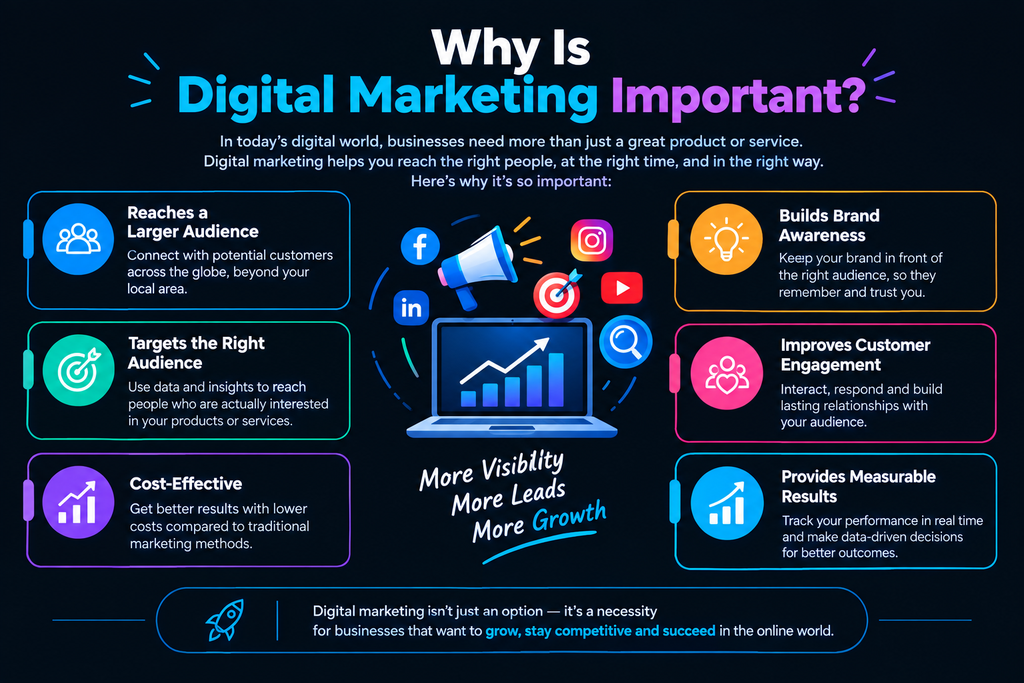
Businesses may interact with both current and future clients in a number of ways thanks to digital marketing.
Some important benefits include:
- Wider reach: Businesses can reach audiences beyond their local area.
- Audience targeting: Many digital platforms provide options for reaching specific audiences.
- Measurable performance: Traffic, clicks, engagement, leads, and conversions can all be tracked by businesses.
- Customer interaction: Direct communication is possible through email, social media, and other ways.
- Flexible budgets: Businesses can choose different approaches according to their objectives and available resources.
- Data-driven decisions: Performance data can help businesses understand what is working and what needs improvement.
However, digital marketing does not guarantee immediate results. Performance depends on factors such as the industry, audience, competition, budget, content quality, and execution.
Digital Marketing Example
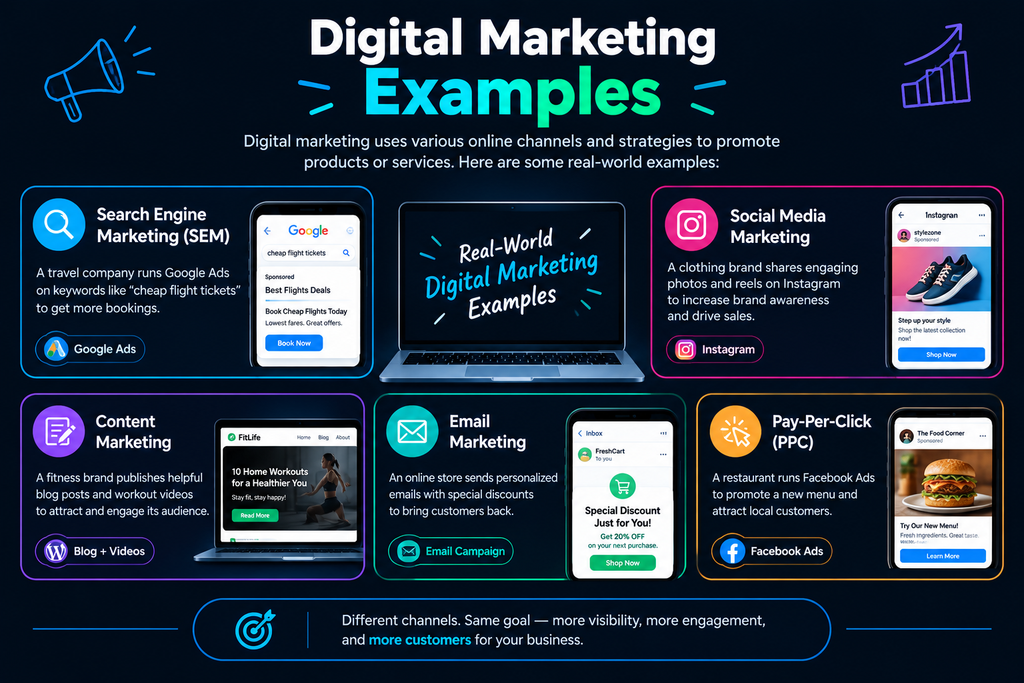
Let’s take a simple example of a local clothing business.
Suppose a clothing store wants to increase online sales.
It could use:
SEO: Create website pages and helpful content around relevant clothing searches.
Social Media Marketing: Share product images, styling ideas, and videos on social platforms.
Meta Ads: Run targeted advertising campaigns to reach relevant audiences.
Google Ads: Advertise for searches related to products the store sells.
Email Marketing: Send product updates and offers to subscribers.
Analytics: Track website visits, clicks, leads, and sales.
This example shows that digital marketing is not just one activity. Businesses can combine multiple channels to achieve their objectives.
Digital Marketing vs Traditional Marketing
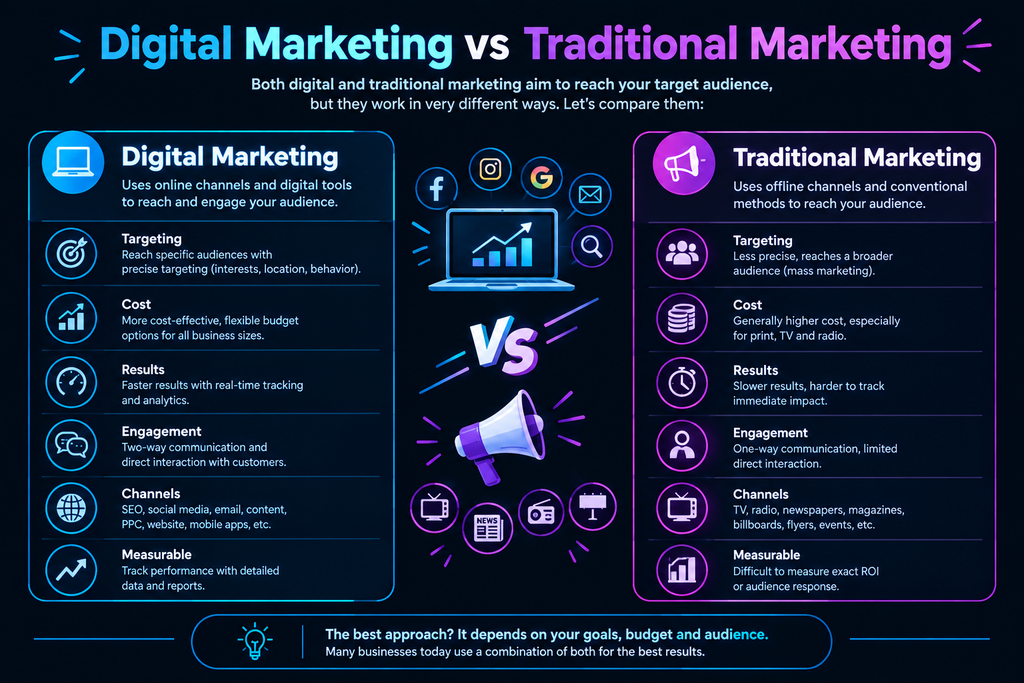
| Digital Marketing | Traditional Marketing |
| Websites | Newspapers |
| Search engines | Television |
| Social media | Radio |
| Billboards | |
| Online advertising | Magazines |
| Digital analytics | Offline measurement |
Traditional and digital marketing are not necessarily competing approaches.Depending on its target market, goals, financial constraints, and marketing plan, a company may choose to employ one or both.
How to Start With Digital Marketing
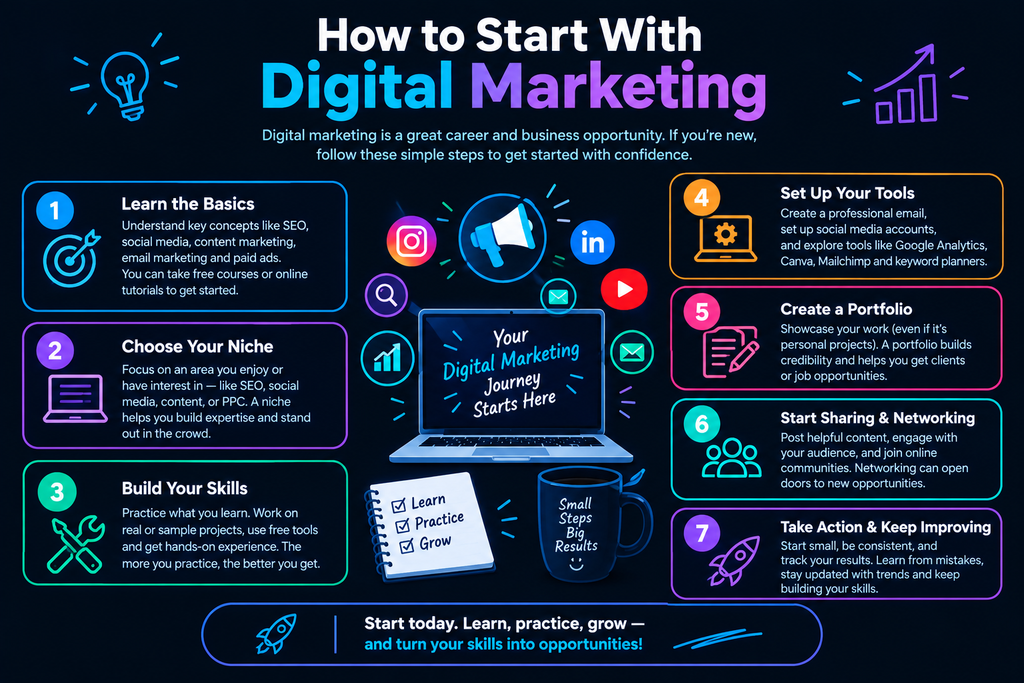
You don’t have to learn everything at once if you’re new to digital marketing.
A simple starting process is:
- Understand your target audience.
- Define clear marketing goals.
- Create a professional website or online presence.
- Research relevant keywords.
- Learn the basics of SEO.
- Build a social media presence.
- Create useful and consistent content.
- Explore paid advertising when appropriate.
- Track your results.
- Improve your strategy using performance data.
Instead of just using every platform that is accessible, it is crucial to know why you are using a specific channel.
Frequently Asked Questions
What is digital marketing in simple words?
Promoting a company, good, service, or brand via digital platforms like search engines, websites, social media, email, and online advertising is known as digital marketing.
What are the main types of digital marketing?
SEO, sponsored search/PPC, social media marketing, content marketing, email marketing, affiliate marketing, influencer marketing, and mobile marketing are the main categories. .
How does digital marketing help a business?
It can assist companies in reaching target audiences, increasing awareness, producing leads, interacting with clients, and tracking marketing effectiveness.
Is SEO part of digital marketing?
Yes. SEO is one component of digital marketing. SEO, social media, content, email, paid advertising, and other digital channels are all part of the larger discipline of digital marketing.
Is digital marketing useful for small businesses?
Indeed. Digital channels can be used by small businesses to establish an online presence, connect with relevant audiences, draw in new clients, and interact with current clients. The business and its objectives should choose the particular approach.
Conclusion
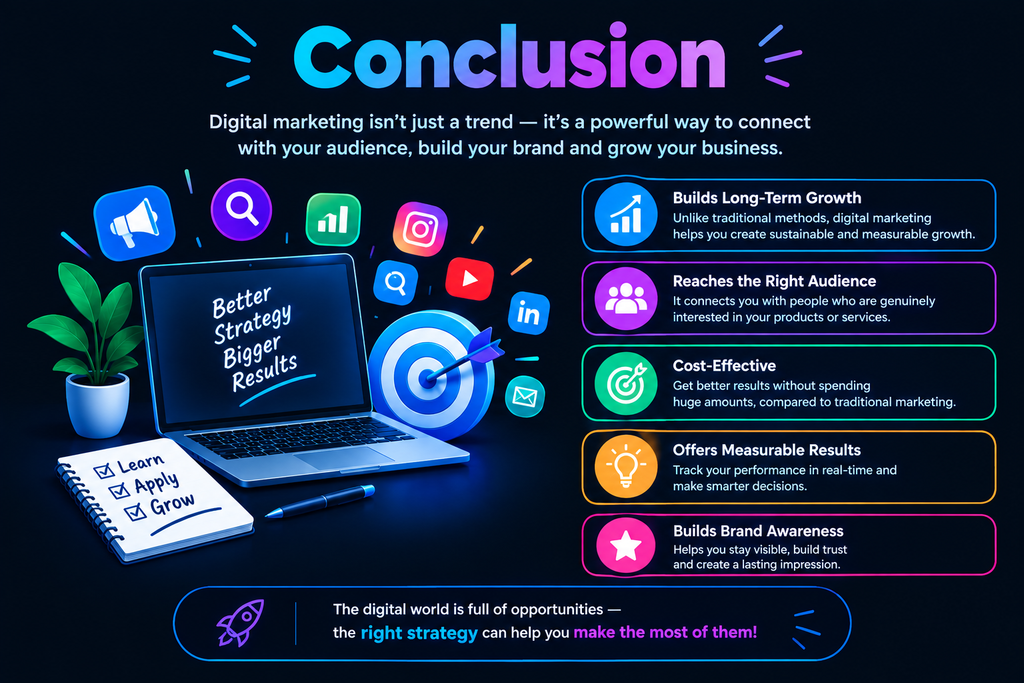
Simply put, digital marketing is the process of connecting a firm with its target audience through digital means. SEO, social media marketing, content marketing, email marketing, PPC advertising, affiliate marketing, and more are all included.
Understanding the target audience and establishing specific objectives are the first steps in a successful digital marketing plan. After that, companies may choose appropriate channels, provide worthwhile content, track results, and keep refining their strategy.
Understanding digital marketing has become crucial for modern organizations as more consumers utilize the internet to contact with companies, compare options, and find information.